Zhejiang Chisheng Valve Technology Co., Ltd. * Zhejiang Chisheng Valve Technology Co., Ltd. * Zhejiang Chisheng Valve Technology Co., Ltd. * Zhejiang Chisheng Valve Technology Co., Ltd.
Steam piping often needs more than a valve that just opens or closes the passage. Pressure changes, high temperatures, thermal cycling and different steam demand can all affect valve performance. A globe valve used in steam system applications can give both careful flow control making internal design very important, for steam distribution, heating equipment, process lines and pressure‑reducing jobs.
Steam flow rarely remains constant throughout an entire operating cycle. Start-up, warm-up, production changes, and equipment demand can create different flow requirements. A valve that only provides full-open or full-closed operation offers limited control over these changes.
Globe valves are widely used for throttling because the disc moves perpendicular to the seat, allowing flow to change progressively with stem travel. Their curved internal flow path also creates pressure loss, which needs to be considered during system design.
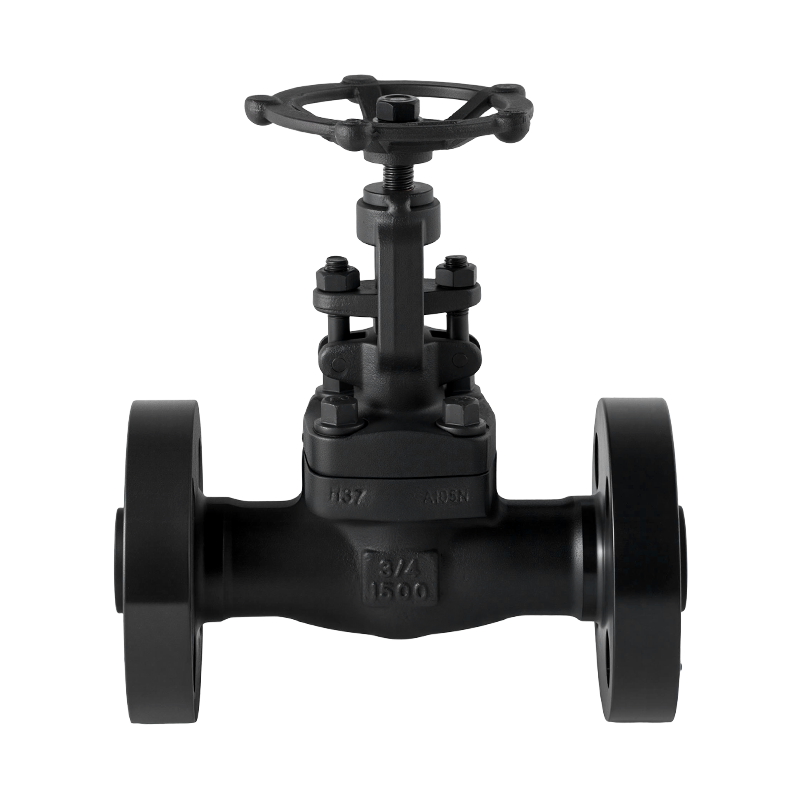
Steam places additional demands on valve construction because temperature can vary substantially during start-up and normal operation. Repeated heating and cooling can affect clearances, sealing surfaces, packing, and internal components.
Material compatibility should therefore be evaluated together with pressure and temperature ratings. Carbon steel may suit certain saturated-steam duties, while alloy steel or stainless construction can be considered for higher-temperature or more demanding service. The appropriate pressure-temperature rating should always correspond to the actual valve material and design.
Flow direction can influence opening force, seat loading, and thermal behavior. Globe valve designs commonly use flow under the disc for standard throttling service, allowing line pressure to assist disc movement during opening. High-temperature steam applications may require a different flow arrangement depending on the valve design and operating duty.
Technical references specifically note that high-temperature steam can create significant temperature differences around the disc and seat. Such conditions make flow direction an engineering consideration rather than a simple installation detail.
Partial opening concentrates steam velocity through a relatively small passage. High velocity combined with pressure reduction can increase erosion and other flow-related stresses, particularly during continuous throttling.
Steam control valve sizing therefore needs careful attention to the expected operating range. Oversizing can keep the valve close to the seat for extended periods, increasing the risk of wire-drawing and poor low-load control.
Body configuration can change the balance between throttling capability and pressure loss. Conventional T-pattern globe valves redirect the flow through the body and generally create higher resistance. Y-pattern designs use a more streamlined internal arrangement, which can reduce pressure loss while retaining globe-valve throttling characteristics.
This difference becomes relevant on steam lines where pressure margin is limited. A T-pattern configuration may suit applications where controlled pressure drop is acceptable, while a Y-pattern design can be considered for higher-flow or higher-velocity service where reducing internal resistance matters.
Steam service requires more than checking the nominal pipe diameter. Several technical parameters should be reviewed together.
A globe valve for steam system applications has a broader role than simple isolation. Its linear disc movement allows controlled steam adjustment, while the body geometry provides useful pressure-drop characteristics for regulating service. At the same time, high temperature and differential pressure make correct sizing, material selection, flow direction, and trim design essential.
Steam lines can therefore benefit from treating the valve as part of the overall flow-control system rather than as an interchangeable shut-off component. Matching valve capacity and construction with actual steam conditions provides a more reliable basis for long-term operation.
Steam service puts several demands on a valve at the same time: isolation, throttling, pressure control, thermal stability, and sealing. Globe valve construction addresses these requirements through controlled disc movement and a purpose-built flow path. The right globe valve for steam system duty should be evaluated through pressure, temperature, Cv, trim, body pattern, and flow direction together.

We are a professional manufacturer of industrial valves,
specializing in gate valves, globe valves, check valves, ball valves,
and custom-engineered valve solutions.
+86-13057728556
+86-13857082222
csvalvetech@gmail.com
1st Floor, Building J, Zhuao Canaan Secondary Industrial Park, Yongjia County, Wenzhou City, Zhejiang, China
Let's Work Together

 English
 中文简体
中文简体
 русский
 Español